Village
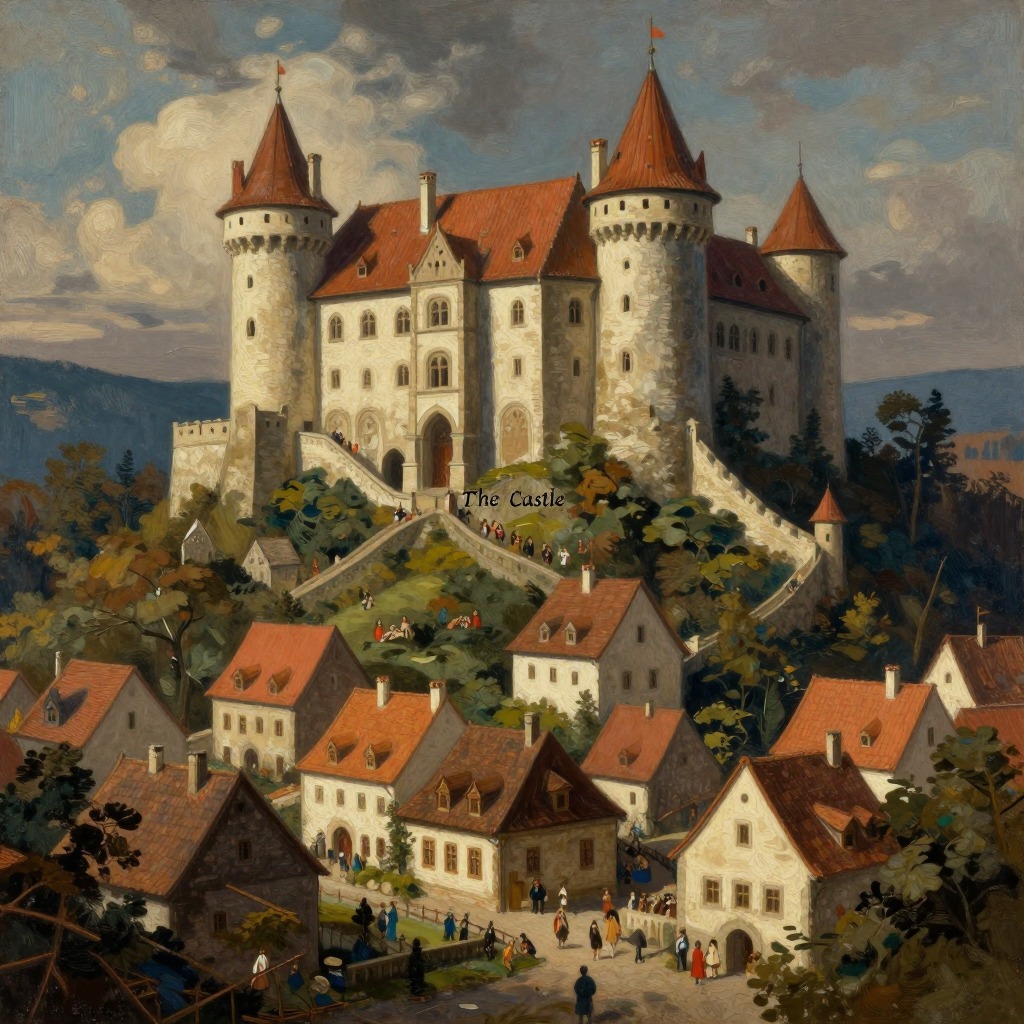
The Village is the snowbound, castle-dominated community where K. arrives and struggles to establish himself. It is a place of strict rules, social exclusion, and bureaucratic entanglement, where every inhabitant is bound to the castle's authority. The village's physical and social landscape shapes K.'s entire experience, from his initial rejection to his final exhaustion.
Geography and First Impressions
K. first sees the village late in the evening, deep in snow, with Castle Mount shrouded in mist and darkness, so that the castle appears as "a void." The village itself is a collection of low cottages, with snow piled up to the windows, while the castle above seems to rise free and light. As K. walks through the main street, he finds it does not lead to the castle but merely passes close to it, turning aside "as if on purpose," and the village seems endless, with frost-flowers on window-panes and no human beings in sight. The village is also a place of strict rules: the young man Schwarzer tells K. that "This village belongs to the castle, so anyone who stays or spends the night here is, so to speak, staying or spending the night at the castle," requiring a permit from the count. This initial confrontation establishes the village's fundamental principle: it is not an independent community but an extension of the castle's authority.
Social Structure and Exclusion
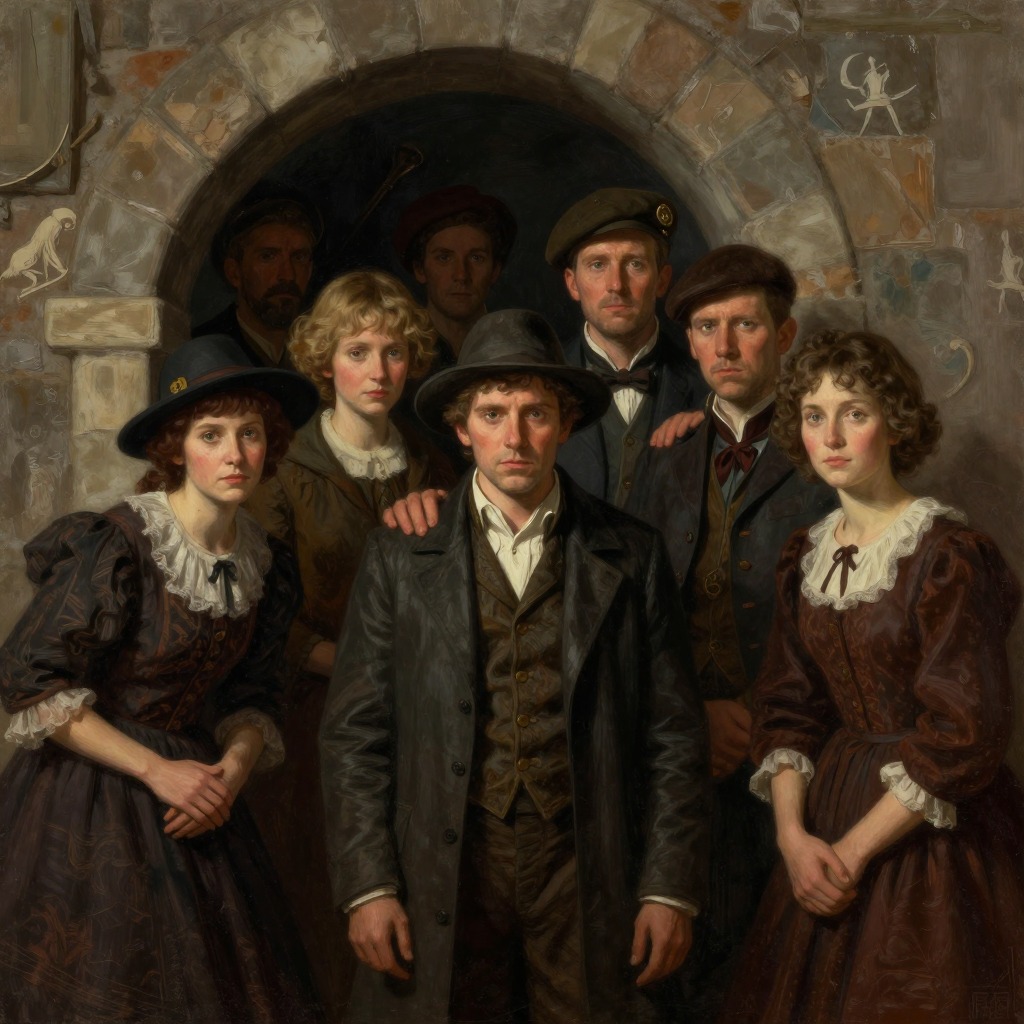
The village is characterized by a rigid social hierarchy and a deep suspicion of outsiders. K. is repeatedly rejected: at Lasemann's house, the master tanner tells him, "hospitality isn't a custom here, and we don't need any visitors," and he is frogmarched out. The villagers' faces are described as "tormented," with skulls "beaten flat on top," and they follow K. around with persistent curiosity, yet they also avoid him. The village is also a place of social exclusion, as seen in the ostracism of Barnabas's family after Amalia's refusal of Sortini. Olga explains that the family was "entirely excluded from village life," and that the villagers' disdain was "a permanent ostracism." The village's social norms are enforced through fear and conformity, with the castle as the ultimate arbiter of belonging.
The Castle's Grip on Village Life
The village is entirely subordinate to the castle, which controls even the most mundane aspects of life. The telephone, for instance, is unreliable: the village mayor explains that calls to the castle are "just an illusion," and that the only real information is the "rushing, singing sound" on the line. The village mayor himself is a figure of bureaucratic confusion, entangled in the castle's files and decrees, and he tells K. that "no land surveyor" is needed, revealing the arbitrary nature of the castle's decisions. The village's institutions, such as the school and the inns, are all subject to castle rules: the Castle Inn is exclusively for the gentlemen from the castle, and the school janitor's duties are dictated by the teacher, who is himself a minor official. The village is thus a place where the castle's power is felt everywhere, yet its workings remain opaque and inaccessible.
The Village as a Place of Waiting and Exhaustion
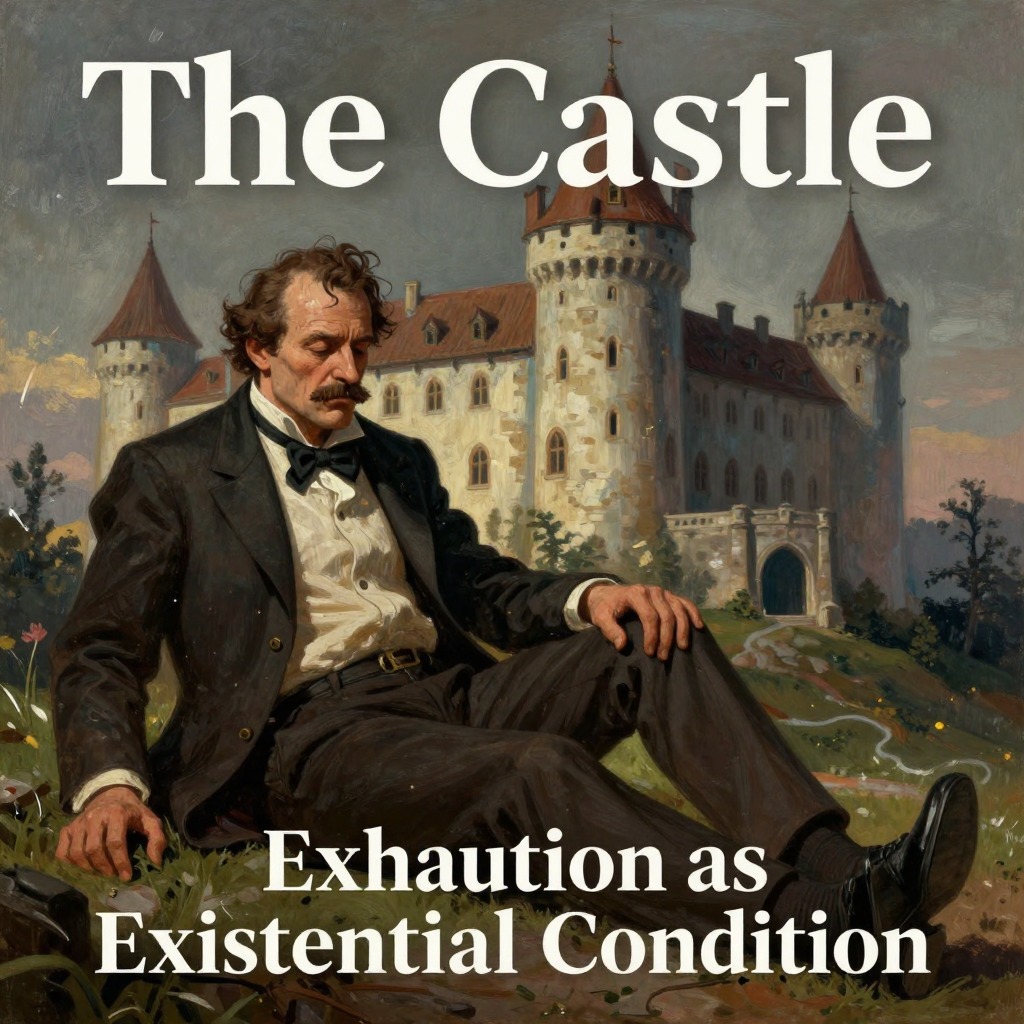
K.'s experience of the village is dominated by waiting and exhaustion. He waits for Klamm outside the Castle Inn, in the snow, and later in the corridor of the inn, where he is scolded for lingering. The village's winter is long and monotonous, as Pepi notes: "winter here is long, a very long, monotonous winter." K.'s own weariness grows throughout the novel, culminating in his twelve-hour sleep at the Castle Inn. The village is also a place of constant movement and noise, as seen in the chaotic distribution of files in the corridor, where the gentlemen are too bashful to show themselves in the morning. This atmosphere of perpetual activity and exhaustion reflects the village's role as a place where nothing is ever truly resolved, and where K.'s efforts are ultimately futile.
The Village's Significance
The Village is not merely a setting but an active force in the novel. It embodies the themes of alienation, bureaucracy, and the inaccessibility of power. K.'s struggle to gain a foothold in the village mirrors his larger struggle with the castle, and the village's social dynamics—its hospitality, exclusion, and fear—serve as a microcosm of the castle's authority. The village is also a place of contrast: it is both a refuge and a prison, a place of warmth and of cold, of community and of isolation. Ultimately, the village represents the human condition under an incomprehensible and all-powerful authority, where individuals are caught in a web of rules and expectations that they can never fully understand or escape.